Businesses sourcing raw materials rarely face the same risks across every commodity market. While some markets experience supply-side pressures that threaten availability, others face greater price pressures driven by trade policy, inventories, demand shifts and broader market developments.
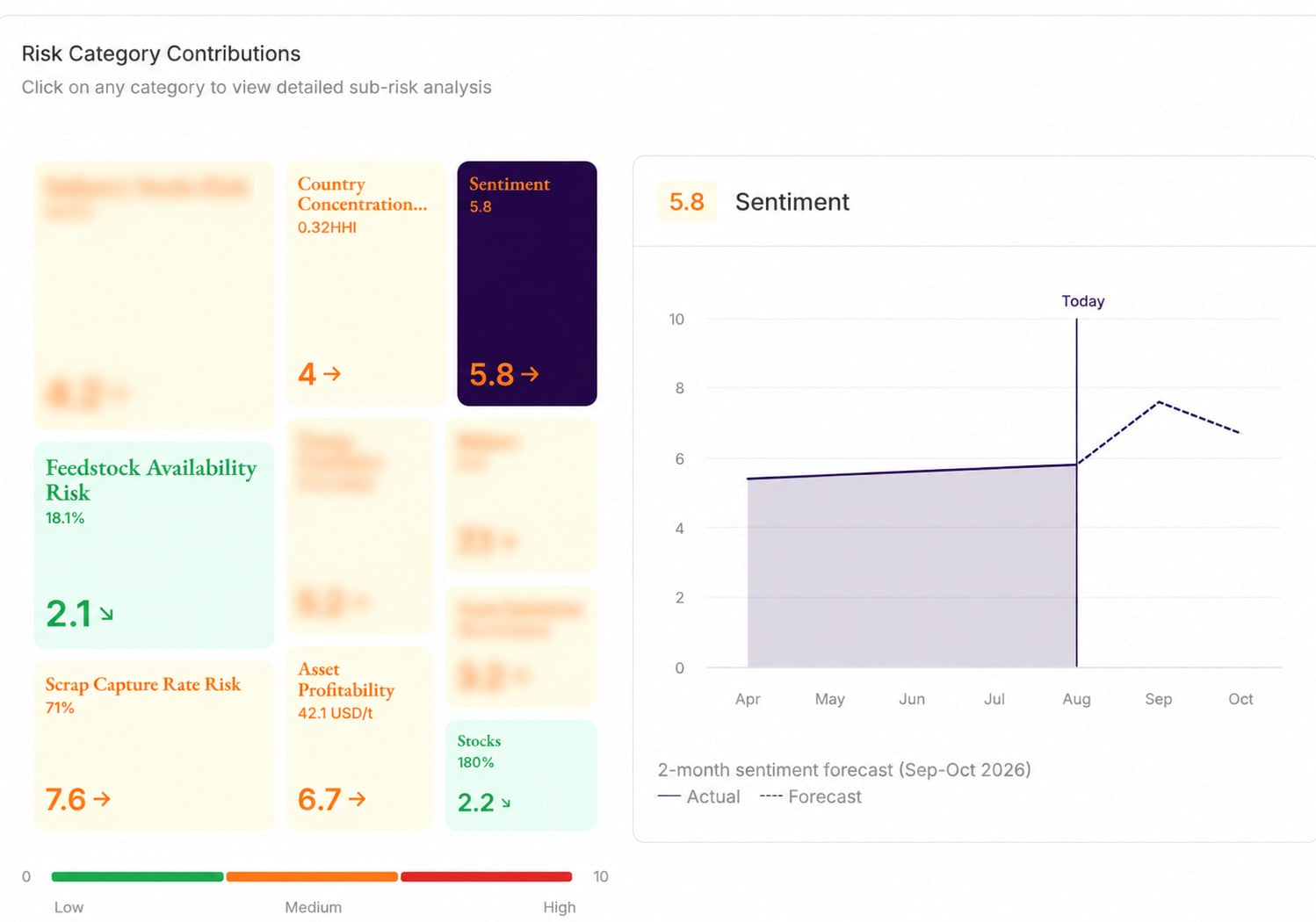
Track supply risk and price risk across commodities in one place. See how CRU Risk Navigator works.
The challenge is not simply identifying risk. It is understanding where pressures are building, which commodities require attention first and where evolving market conditions may have the greatest impact on sourcing, costs and business planning.
Comparing risk consistently across commodities can help organisations prioritise attention and respond more effectively to changing market conditions.
Data from CRU Risk Navigator illustrates how risk profiles can vary across commodity markets. While aluminium is currently facing greater supply-side pressures, copper and steel are experiencing elevated price risk driven by different market dynamics.
Risk is assessed by the methodology that powers CRU Risk Navigator, to provide scores on a scale of 1-10, with higher scores indicating greater levels of supply or price risk.
Aluminium Commodity Price Risk and Supply Risk
CRU Risk Navigator Scores (Dated: 28th October 2026)
Supply Risk: 6.8 | Price Risk: 4.4
Aluminium faces greater supply-side risk than price pressure, with physical tightness persisting despite more moderate price signals.
Historically low inventories, delayed capacity additions and ongoing ramp-up risks continue to support near-term scarcity. Meanwhile, price pressures have eased as the September rally unwound. Expectations of stronger supply growth and a substantial surplus in 2027 also temper the price outlook.
Related market context: Conflict in the Middle East threatens aluminium and alumina trade flows
Copper Commodity Price Risk and Supply Risk
CRU Risk Navigator Scores
Supply Risk: 5.9 | Price Risk: 9.1
Copper shows significantly higher price risk than supply risk, indicating stronger pressure on pricing conditions than on physical availability.
Supply risk remains moderate. Labour issues in Chile have largely eased, but a breakdown in labour relations at Highland Valley presents a potential production disruption. Mine disruptions remain close to historical averages, while sulphuric acid shortages and weather-related risks affect parts of the supply chain.
Tight inventories and uncertainty around US tariff policy continue to influence pricing. Although labour dispute resolutions have reduced some immediate pressure, copper remains sensitive to developments affecting future price expectations.
Related market context: Chile and Peru's competitive positioning amid current geopolitical tensions
Steel Commodity Price Risk and Supply Risk
CRU Risk Navigator Scores
Supply Risk: 5.5 | Price Risk: 9.7
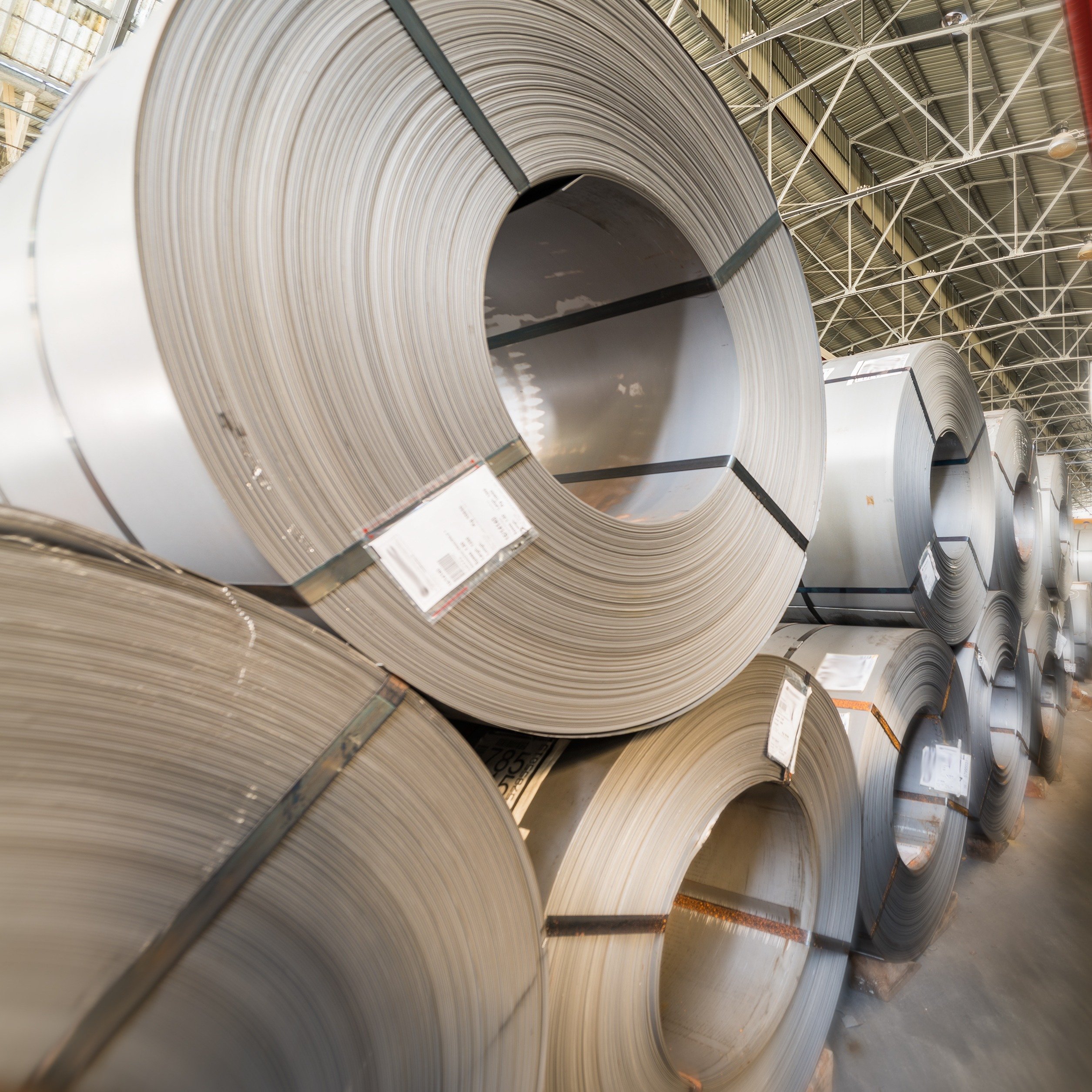
Steel has the highest Price Risk Score of the three commodities, with significantly greater price pressure than supply disruption risk.
Supply risk remains moderate overall, but regional conditions vary. US plate, sheet and longs availability remains tight, while European supply faces trade measures and capacity uncertainty. China remains comparatively well supplied amid weaker demand.
Price risk is particularly elevated in the US, where tight supply, strong demand, low inventories and extended lead times support higher prices. Trade measures continue to influence US and European markets, contrasting with China’s ample supply and softer demand.
Related market context: EU steel import quotas: Is the EU market heading towards a steel supply shortage?
The Intelligence Behind the Scores
The scores featured in this article are powered by CRU Risk Navigator
CRU Risk Navigator combines CRU's proprietary commodity intelligence, market forecasts, supply-demand balances and analyst expertise to generate supply and price risk scores across commodity markets. Beyond highlighting where risks are emerging, the platform helps you understand the market factors influencing those risks and monitor how conditions evolve over time.
While this article focuses on aluminium, copper and steel, CRU Risk Navigator is designed to provide a broader cross-commodity view of market risk. Its consistent methodology helps organisations compare risks, prioritise attention and identify where changing market conditions may require closer monitoring.
Supply Risk reflects the level of risk affecting physical supply availability, while Price Risk reflects the level and direction of pressure acting on prices.
Future coverage is intended to extend to additional metals and fertilizer markets.
See How CRU Risk Navigator Supports Your Role
Procurement and Sourcing Teams
Identify emerging supply and price risks across key commodities and support sourcing decisions.
Risk Management Teams
Monitor risk across multiple commodities and maintain visibility of changing market conditions.
Market Intelligence and Strategy Teams
Track evolving market risks and understand the factors shaping commodity markets.
Business and Commercial Leaders
Gain visibility into commodity risks that may influence operational and strategic decision-making.
Turn Commodity Risk Insight into Better-Informed Decisions
View more about CRU Risk Navigator or speak to an expert. Request a demo to see how CRU Risk Navigator can help you prioritise emerging risks, inform sourcing decisions and plan with greater confidence.