Last month, we predicted that strong wind and a fragile economy would lower carbon prices from ~€78 /tCO2 to ~€77 /tCO2.. However, the price surged to ~€82 /tCO₂ after Germany unveiled a new industrial subsidy scheme designed to shield companies from carbon price volatility and accelerate industry decarbonisation. Prices received sustained support from rebound power demand and an ongoing reversal of gas-to-coal switching. Meanwhile, an expected rise in wind generation, combined with growing nuclear and hydro generation, created countervailing downwards pressure. This tug-of-war ultimately limited further gains, leading to a stable monthly close of ~€80 /tCO₂.
Looking ahead, based on current market dynamics, carbon prices for December are expected to maintain their strength, with opposing forces creating a stable equilibrium. The forecast for above-average wind speeds in early December is set to boost wind power generation. Combined with the typical seasonal rises in nuclear and hydro output, this reinforces the outlook for strong renewable generation throughout the month. However, robust renewables will be largely offset by rebound power demand, which could exert significant upward pressure if demand returns fully to historical levels. A key upside risk to carbon pricing is that, with gas prices forecast to outpace coal, the current unsustainably high level of gas usage for power generation creates a potential for significant gas-to-coal switching. Critically, the €80 /tCO₂ level now provides clear technical and market-sentiment support. With strong power demand offsetting high renewable generation and the potential for gas-to-coal switching, we expect carbon prices will stay at a high level next month.
CRU Online subscribers can access the short-term carbon price report here. Otherwise, please speak to our sales team to access more in-depth information from CRU.
High power demand next month
Power demand increased in November, showing both a monthly and a seasonal improvement as it moved closer to the historical average. The rebound power demand was driven by colder-than-expected temperatures, though forecasts for December now point to warmer-than-average conditions. Despite this, heating demand remains a non-negligible factor given the time of year. The steady demand outlook is further reinforced by positive industrial signals. Our forecast for European steel profitability, a key leading indicator, has been upgraded for Q4, signalling an improved outlook for the European economy.
December power demand should increase seasonally and approach historical averages, yet stay below due to warmer forecasts and a weak November base. Overall, this will exert upward pressure on EUA demand. Any outperformance compared to this expectation will create additional upward pressure on carbon prices.
Wind output shows sustained growth
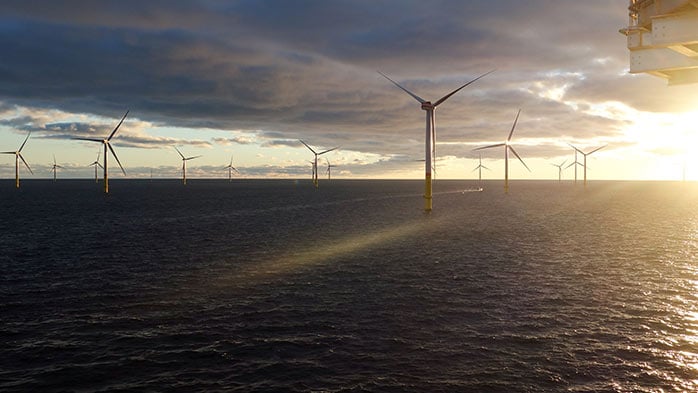
After a mid-month lull, wind generation strengthened considerably in the latter part of November. This lifted both total output and wind’s share of power demand for the month. Although generation remained below the historical level, the deficit was notably smaller than in prior months, signalling a convergence towards seasonal norms. The short-term forecast indicates wind speeds will be above average over the next ten days. This should boost wind generation and exert downward pressure on carbon prices, though output is still projected to stay below the historical average. Looking ahead, if wind speeds normalise after this period, the downward pressure on EUA demand will be modest. However, should above-average wind conditions persist beyond the ten-day window, the bearish impact on carbon prices would intensify.
Hydro power generation in Europe increased in November, ending its run of consecutive monthly declines. Reservoir levels also rose, moving closer to the historical average, signalling a clear improvement. Despite precipitation forecasts remaining below average, this recovery in output and reserves suggests a return towards normal patterns. Consequently, we expect hydropower generation to continue its gradual recovery, albeit while staying below its full historical potential. Overall, we anticipate hydro output will have only a minimal effect on EUA demand next month.
Potential for gas-to-coal switching
Total fossil generation rose in November. Although rising coal prices and stable gas prices provided a fundamental rationale for some reversal of gas-to-coal switching in November, gas usage reached an unsustainably high level relative to its current price. This was driven by its flexibility for power generation and ample supply from strong LNG and pipeline flows, which reduced the urgency to draw on below-target storage.
Looking ahead, gas prices are expected to rise more than coal and this price dynamic is set to prompt moderate gas-to-coal switching. However, market data reveals a strong counter-trend – gas usage has increased for five consecutive months despite signals to the contrary. Consequently, our base case assumes that no significant gas-to-coal switching will occur in the near term. If gas-to-coal switching materialises, it would place notable upward pressure on EUA demand and carbon prices.
Robust nuclear generation expected in December
Nuclear generation maintained an upward trend in November as we anticipated. In France, the Flamanville 3 EPR reactor marked a significant milestone by achieving 80% of its licensed thermal power, solidifying its path to full commercial operation. This progress was only briefly interrupted by a short-lived, jellyfish-induced outage at the Gravelines facility, which had a minimal impact on overall output. With stable operation and no major maintenance scheduled, nuclear power is poised to provide dependable baseload generation in December. Without major news, we expect nuclear power generation to have a minimal impact on the carbon price in December, although the outlook remains positive.
If you want to hear more about carbon market forecasts and our short-, medium- or long-term carbon price forecasts, request a demo as part of CRU’s Sustainability and Emissions service, or email us at sales@crugroup.com – we’d be happy to discuss this with you.