

Energy Transition and Decarbonisation

Emission Pathways, Power Systems and Carbon Prices in One Data Suite
Turn complex transition signals into hard numbers with coherent data on emission pathways, power systems, carbon prices, technology costs, policy and metals demand – all aligned to the realities of steel, aluminium, copper, fertilizers and other critical value chains.
The Energy Transition and Decarbonisation data-suite, delivered via CRU’s Energy Transition and Decarbonistation solution provides the numerical backbone for transition strategy. It combines asset and country‑level datasets into a consistent view of:
- How emissions and carbon prices evolve under different climate pathways
- How power systems and costs change across regions and technologies
- How clean technologies, grids and renewables drive metals demand
- How policy and scenarios reshape transition trajectories
Granular data to navigate the transition to a low-carbon economy
Emissions and climate pathway data
- Historical and forecast emissions by sector (e.g. power, road transport, steel, cement, ammonia, alumina refining, aluminium smelting, copper smelting, nickel smelting).
- Regional splits for major economies and regions (e.g. China, North America, Europe, JKT, India).
- Aggregated global pathways with associated temperature uplift.
- Alternative emissions pathways required to meet different temperature targets, including implied carbon removal needs.
Carbon price and abatement data
- Long‑term “required” carbon price trajectories by country/region to 2050.
- Country‑level carbon abatement cost curves built from technology‑specific cost and potential data.
- EU ETS supply and demand data underpinning carbon price modelling.
- Scenario‑indexed carbon price series for multiple climate and technology pathways.
Power system and electrification data
Track how the power mix evolves and what it means for emissions and energy costs. Our view is consistent with global energy transition pathways such as IEA Net Zero by 2050, while adding commodity-specific and country-level granularity.
- Primary energy consumption and electricity's share of primary energy by country
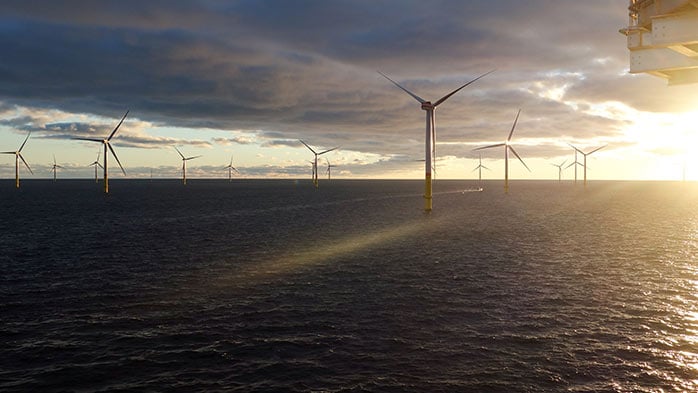
- Annual electricity generation, capacity, utilisation and emissions by technology (thermal coal, gas, oil, hydro, nuclear, solar, onshore wind, offshore wind and others)
- Historical and forecast series to mid-century for approximately 50–60 geographies and global totals
Power and hydrogen cost data
- Industrial power price series by country/region.
- Levelised cost of electricity (LCOE) by generation technology and country.
- Levelised cost of hydrogen (LCOH) by country.
- Multiple cost scenarios (base, high, low) reflecting different technology and fuel price trajectories.
Grid and transition metals demand data
- Electricity transmission network line length by country.
- Electricity distribution network line length by country.
- Detailed metal demand forecasts by renewable type (solar PV, onshore wind, offshore wind).
- Supplementary transition‑related metals data (wire and cable, battery energy storage system (BESS) manufacturing metal demand).
Policy and scenario comparison data
Connect policy signals and climate scenarios to hard numbers. Our regulatory and scenario work is designed to complement international frameworks such as UNFCCC – Nationally Determined Contributions (NDCs) and widely used financial-sector scenarios like NGFS Climate Scenarios.
- Structured policy database with policy records by country, initiative and theme (e.g. CBAM, ETS, voluntary carbon markets, critical minerals strategies, subsidies)
- Historical evolution and current status of key policy measures
- Scenario-indexed datasets to compare emissions, power mix, carbon prices and technology costs across scenarios
- Central projections versus pathways aligned to specific climate goals
Sign up to receive CRU’s Newsletter
Sign up
Featured Content
Energy Transition and Decarbonisation
Solutions
Expert intelligence, data and strategic consulting, to help you achieve your sustainability goals and reduce your carbon footprint
Learn MoreLearn more about CRU Data
Prices and Indices
Expert commodity prices and indices for steel, aluminium, battery materials, base metals and fertilizers - global coverage from CRU. Request a demo.
Learn More
Supply and Demand
We provide you with crucial consumption, production, capacity, trade, market balance and inventory data across the mining, metals, fertilizer and battery value chains.
Learn More
Asset Data: Supply, Costs, Emissions and Valuations
Our detailed insights into costs, production, emissions performance and valuations empower you to make informed decisions and drive your business forward.
Learn More
Macroeconomic and End-use Demand and Cost Drivers
International macroeconomic analysis empowering your decision making. CRU’s macroeconomic analysis enables you to make informed choices, mitigate risks, and seize opportunities across the global commodities markets
Learn More