

Energy Transition and Decarbonisation Service



Make meeting the carbon budget a strategic advantage
The energy transition is reshaping entire industries and compressing the window for strategic advantage. The shift toward renewable energy, electrification and new clean technologies – combined with volatile markets, geopolitical risks and evolving climate policy – is creating unprecedented complexity for companies exposed to energy, commodity and emissions-related risks, from steel and aluminium producers to fertilizer manufacturers and copper miners.
Independent analyses such as the IPCC AR6 Mitigation pathways show how fast energy systems, investment flows and technology mixes must change to stay close to +1.5–2°C pathways – raising the stakes for strategic decisions in transition-critical commodity sectors.
See the full picture of the energy transition
Our Energy Transition and Decarbonisation service, built on rigorous data, goes beyond headlines to give you three critical perspectives on the transition and its implications for carbon, sustainability and emissions performance:
- Current trajectory: Central view of where the transition and global emissions are heading based on today’s production realities, policies and stated commitments.
- Lower-emissions pathway: How rapid decarbonisation and accelerated deployment of clean technologies could unfold, and what this means for commodity markets and net-zero strategies.
- Higher-risk pathway: The costs and consequences of delayed action, where physical climate risks, higher adaptation costs and operational disruption create material business risks.
Insights across the key dimensions of Energy Transition and Decarbonisation
The energy transition is not happening in isolation; it is a complex web of interconnected forces reshaping markets, supply chains and business models. Our integrated Energy Transition and Decarbonisation intelligence provides a complete view across seven critical areas:
- Emissions trends and carbon budgets
- Policy and regulations
- Carbon markets and pricing
- Clean technology
- Electrification trends and costs
- Climate scenarios
- Economics and commodity market intelligence
See why industry leaders trust CRU with their decsion-making.
Navigate every dimension of the energy transition with intelligence that connects the dots
Emissions trends and carbon budgets
Track your position against the global carbon budget. We monitor 28 billion tonnes of CO₂ annually (60% of global non-land-use emissions) with asset-level modelling and forecasts to 2050, benchmarked against Paris-aligned temperature goals and net-zero commitments.
Policy and regulations
Navigate climate and energy policy with confidence. We track CBAM, carbon pricing schemes, critical mineral policies, emissions trading systems and disclosure requirements – showing how they reshape competitiveness across value chains.
Carbon markets and carbon pricing
Master the economics of decarbonisation. Carbon prices and regulated markets are expanding globally, with over 70 instruments now in place. In Europe, the EU ETS and new CBAM are reshaping trade flows for carbon-intensive materials.
We deliver rigorous carbon price forecasts and scenario analysis linking technology costs, fossil fuel prices and emission-reduction targets. Our analysis includes sector-specific abatement curves – covering metals, shipping and alternative fuels – to support technology prioritisation and investment decisions.
Clean technology
Cut through the hype with realistic technology costs and viability analysis. The energy transition is capital-intensive. We provide clear-eyed techno-economic analysis of hydrogen, green ammonia, CCS, renewables and storage – and their implications for commodity value chains.
Electrification trends and power system transformation
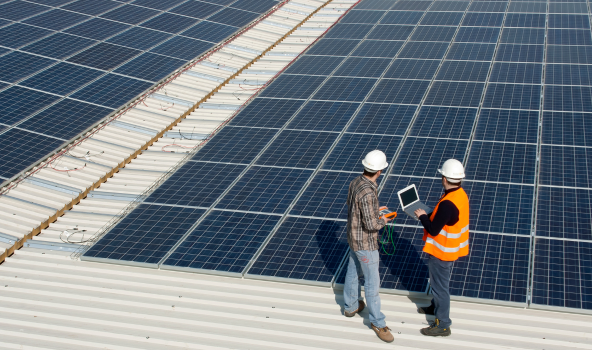
Decode the power transition from grid expansion to renewable costs. We track capacity across solar, wind, hydro, nuclear, gas and coal – integrating policy targets, cost dynamics, grid constraints and carbon pricing. Our analysis connects power mix evolution to prices, investment needs and demand for steel, aluminium and copper.
Climate scenarios
Navigate uncertainty with next-generation climate and transition scenarios. Our climate scenarios are built from the bottom up, using asset-level and sector-level data on emissions, technology deployment as well as policy and market trends, rather than relying solely on aspirational targets. They provide coherent views of different transition pathways and associated climate, policy and market risks.
Economics and commodity market intelligence
Where energy transition intelligence meets commodity markets. We analyse how decarbonisation reshapes supply, demand, cost structures and investment flows across steel, aluminium, fertilizers, copper and battery materials.
By linking transition drivers to commodity-specific dynamics, we show how decarbonisation affects margins, asset competitiveness and long-term pricing – so you can compare transition risk and opportunity across markets.
Why organisations choose CRU for Energy Transition and Decarbonisation
-
Independent, defendable analysis grounded in deep commodity, technology and policy expertise.
-
Granular, asset-level and sector-level modelling that aggregates to coherent regional and global views.
-
Integrated Energy Transition and Decarbonisation perspective rather than siloed outlooks.
-
Scenario-based decision support to stress-test net-zero, capex and portfolio strategies.
-
Actionable insight that turns complex energy transition dynamics into clear direction for boards, investors and operational teams.
Sign up to receive CRU’s Newsletter
Sign up