Toyota has been promising all-solid-state batteries (ASSBs) in its cars for over a decade, but its roadmap has shifted as challenges emerge. With an initial 2020 goal, the company is now targeting the end of this decade for commercial launch of ASSB-bearing electric vehicles. The intended specifications are astonishing – slated to have a shelf-life of up to 40 years, able to provide a 1,000 km range on a single charge and be fully charged within 10 minutes.
Chinese manufacturers are also focusing on this technology. In early 2024, a government-led consortium established the China All-Solid-State Battery Collaborative Innovation Platform (CASIP). CASIP aims to foster commercialisation of ASSBs in the country between 2027–2030. The results are already proliferating. The automaker GAC Group is now capable of producing ASSBs suitable for EVs. The company plans on scaling mass production from 2027.
Other Chinese companies are not far behind. Chery introduced a prototype of an ASSB bearing a lithium- and manganese-rich cathode in October 2025. It plans to commission a pilot plant for this technology in 2026, with a mass rollout from 2027. As shown in the chart below, taken from CRU’s Battery Value Chain Service, BYD, CATL, LGES and other major cell companies also have clear goals on the commercialisation of ASSB. It is only a matter of time until these plans materialise, which is expected to then ripple into the broader market.
Solid-state: A huge step forward, but remains uncompetitive
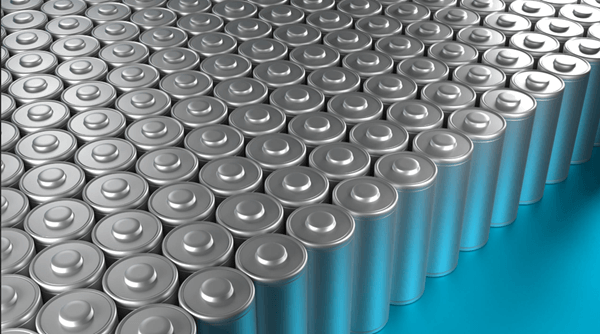
An all-solid-state battery (ASSB) replaces the flammable liquid electrolyte found in conventional lithium‑ion cells with a solid material in the form of polymer, oxide, or sulphide, often paired with a lithium metal anode. With more thermally stable materials, pack designs can rely less on cooling and containment hardware, potentially reducing system weight. Applying the technology to an electric vehicle (EV) would free up chassis space, giving product designers more flexibility on battery integration and enabling larger pack sizes.
From an anode perspective, lithium metal can store more charge per gram than graphite – 3,860 mAh/g vs. 372 mAh/g respectively – while enabling faster charging cells. Since the same cathode materials can be used in ASSB as in liquid-based cells, minimal disruption to the supply chain of cathode materials is expected. However, higher capacity cathode materials will likely be preferred in the manufacturing of ASSBs.
On a fundamental level, ASSBs have some intrinsic challenges. Replacing porous separators and liquid electrolytes with solid electrolytes introduces significant additional raw material demand, particularly lithium. Additionally, being all-solid, expansion becomes a greater issue in charge/discharge cycling, as well as the change in ambient conditions. The battery may lose physical contact between its layers which dramatically reduces its capacity, leading to a shortened cycle-life. A thinner solid electrolyte diminishes the risk of contact loss, however, it introduces a new risk – dendrite formation. Dendrites form when lithium ions form protruding lithium metal on the surface of the anode during cycling. With thinner layers, the probability of dendrites crossing the electrolyte increases, causing a short-circuit. Alternatively, high external pressure could be applied to the cell to keep layers in contact, but it increases system complexity, raises costs, and reduces cell density.
Beyond technological challenges, competitive ASSB production cost is yet to be achieved. Polymer-based all-solid-state batteries are less technically challenging, and, thus, cheaper to manufacture. However, their performance remains subpar when compared with liquid electrolyte batteries. In contrast, sulphide and oxide (solid) electrolytes, which bear more promising technical properties, often require ultra-dry, carefully controlled processing to prevent hazardous gas formation.
Today, according to CRU’s Battery Technology and Cost Service, ASSB production cost is estimated to be, at best, 2.3 times more than conventional lithium‑ion cells, with the electrolyte being the main cost driver. Cost parity will not be achieved in the next decade, but costs will become more competitive as the industry learns more efficient manufacturing techniques, and scales electrolyte supply chains.
A compounding impact on raw material demand
Despite the challenges, developers will overcome these in the long-term and ASSBs will gain market share. Large-scale commercialisation is expected by 2030, with adoption starting in premium, niche and demonstrator markets such as high-end smartphones, laptops, high-performance drones, and medical wearables. These applications can afford a premium that provides added safety and higher volumetric energy density.
In addition, automakers will need more time to validate ASSB cells for EV models to assess feasibility in the mass-market. From late 2030’s, we expect ASSBs to be commercially available in mass-market light-duty vehicles (LDV), heavy-duty vehicles (HDV) and in electric vertical take-off and landing (eVTOLs) aircrafts. ASSBs will have a significant advantage in comparison to other battery technologies, particularly in HDV as opposed to LDV as the weight savings allow higher payload capacity and compounded energy savings.
Meanwhile, eVTOLs, often called flying taxis, are an emerging urban mobility alternative promising a greener and faster urban commute. Different from airplanes, these do not require a runway and emit significantly less noise compared to helicopters, allowing for wider use in more urban areas. Throughout our forecast, ASSBs are unlikely to make a significant share in energy storage due to their high production cost and the lower perceived benefit of compact cells.
Despite the diversification in end-use applications, the overall uptake of ASSBs in most end-use applications will be limited. A single battery technology is unlikely to possess optimum physicochemical properties across all applications. ASSB is not an exception, hence, will fail to fully displace the demand for semi-solid or liquid-electrolyte lithium-ion cells and other energy storage solutions, such as redox flow batteries. Semi-solid batteries present a particularly significant risk to ASSBs as they promise most of the benefits of ASSBs at a lower cost and greater cycle life. Nonetheless, existing, and emerging technologies will co-exist to fit diverse needs across battery applications.
Despite only taking nearly a quarter of the market by 2050, the effect of ASSB on raw materials cannot be overlooked. ASSBs shift the raw material balance in two major ways – through lithium-rich electrolytes and lithium-metal anodes.
Moving away from graphite to a lithium metal anode will have a significant impact on the lithium market due to a much higher lithium intensity in the cell. Even if only one-third of global battery demand is solid-state by 2050, around half of the lithium used in batteries by 2050 will be destined for solid-state cell designs. To satisfy this level of demand alone, supply would need to expand by the equivalent of all primary production in 2024.
Critically, though, the form of lithium required for ASSBs would require significant shifts in the supply chain.
The uptake of ASSB will reshape the battery supply chain
A key bottleneck facing soon-to-be large-scale ASSB producers is raw material sourcing. Electrolyte is a major cost differentiator in manufacturing. Securing feedstock and processing it efficiently at scale will be essential for competitiveness. Sulphide solid electrolytes have the most promising physical properties for ASSBs – a material made from sulphide thiophosphate compounds. This electrolyte requires about 30% of total lithium contained in the entire cell – an amount far exceeding the current 7% seen in current battery technologies. Lithium for sulphide electrolytes will come in the form of lithium sulphide (Li2S). Industrially, Li2S is commonly produced by chemically reacting common battery-grade lithium chemicals, lithium carbonate (Li2CO3) or lithium hydroxide (LiOH), with hydrogen sulphide (H2S) or sulphur-containing agents at elevated temperature, followed by purification and drying.
Scaling the Li2S production process faces several challenges as it is less stable than lithium carbonate and hydroxide. Chemical instability, combined with the current lack of demand for Li2S, makes production of this commodity expensive and very limited. Currently, Japan, South Korea and China host most of the pilot-to-commercial Li2S production. These are associated with solid-state electrolyte programs and several companies supply Li2S alongside P2S5 and halide additives. Germany and other EU countries are developing capacity linked to argyrodite and glass-ceramic electrolyte initiatives, often near advanced battery R&D hubs. The United States is ramping up pilot-scale and toll-manufacturing capability, though volumes remain smaller compared to East Asia.
The second major differentiator between ASSB and today’s lithium ion cells is the anode. Lithium‑metal anodes are expected to contain ~40% of the total lithium found within the battery. Battery-grade lithium metal supply remains limited and concentrated. Production is primarily derived from electrolytic reduction of lithium chloride via molten-salt processes and, to a lesser extent, thermal reduction routes, with major output historically clustered in China. Facilities are also located in Japan, Germany and the United States. However, today, metal production comprises about 1% of global refined lithium production, as detailed in CRU’s Lithium Service.
Foil manufacturing is significantly more technically challenging, and capacity is typically integrated at either metal or cell production facilities. Again, only about a fifth of metal production is converted into foil, with most of that being as a component of non-rechargeable Li-ion batteries. Its use in rechargeable batteries is still limited to anode treatment and solid-state prototyping, and at a very nascent stage. Lithium metal foil production would need to be scaled drastically to cater for the uptake of ASSBs. Naturally, this would happen as the technology is popularised, but expansions would be challenged by high energy requirements in electrolysis, hazardous material handling processes, the need for specialised rolling/lamination lines, as well as dry-room and inert-atmosphere logistics from casting to cell integration.
Key takeaways
- Energy density and higher safety of ASSBs are the major drivers of the interest in this technology, which allows EVs, for example, to drive longer on a single charge.
- Large-scale commercialisation of the technology is being constrained by the lack of robust cell design and high production costs. Learning how to design solid cells with a long-life at competitive prices will be key for mass production.
- Although they remain at an early development stage, current hinderances will be overcome in the next decade. ASSB will displace a significant share of battery demand, particularly in premium applications, provided cost and performance compete with semi-solid batteries. This, in turn, will compound lithium demand from the battery market.
- Securing control of raw material and component manufacturing will be a key competitive advantage to ASSB producers. The supply chain now relies mainly on lithium carbonate, but demand will shift towards lithium chloride, prompting new dynamics to emerge.
For readers interested in how battery chemistries and technologies will influence the future of battery markets, CRU’s Battery Technology and Cost Service and Battery Value Chain Service provide detailed understanding of current and emerging battery chemistries, technologies and products.
If you want to hear more about our work on battery supply chains, raw materials and end-use demand, get in touch with us, we’ll be happy to answer your questions.