On 2 April, we held our highly popular annual CRU Beijing cross-commodity seminar, co-sponsored by the Department for Business and Trade, British Embassy Beijing at the InterContinental Beijing Sanlitun. At a pivotal moment for both commodity markets and the global economy, the seminar addressed timely topics that drew a full house.
Following welcome speeches from Michel Rosier, CRU’s Chief Revenue Officer, Chaosheng Tang, CEO of CRU China, and Lewis Neal, His Majesty’s Trade Commissioner, we heard from Dr Xiao Yuchao, Director, Economist Intelligence Unit, Beijing.
The CRU Beijing cross-commodity seminar included ten presentations by CRU analysts and consultants. Below is a brief summary of the key presentations:
The LME copper 3M price reached record highs before falling by nearly 20% over the past three months. The global cathode market is currently in surplus, suggesting prices should trend lower in 2026. However, sentiment has been influenced by the build-up in US stocks and the ongoing conflict in the Middle East. The medium-term outlook remains relatively mild from a supply-demand perspective, although this depends on progress for uncommitted projects.
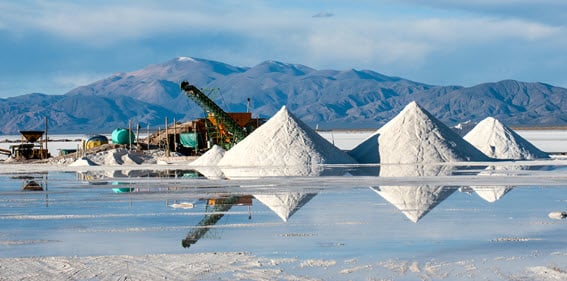
Regarding lithium, Li-ion battery demand is still resilient, but EV growth is cooling and BESS is now leading demand. Policy-driven front-loading is amplifying raw materials demand and supply distortions, tightening balances and supporting prices. Furthermore, price forecasts have been significantly upgraded due to a massive shift in sentiment from December 2025, following various supply issues coming to light.
For zinc, China moved from a net importer to a net exporter of refined zinc in 2025 Q4 for the first time since the 5% export rebate was removed in 2008, which shows a clear structural shift, not a temporary blip. The driver is a long-term divergence in supply conditions – ex. China smelters are constrained by tight concentrate supply and weak margins, while China’s smelting capacity has expanded rapidly since 2022 and is set to exceed ex. China capacity by 2026. China is likely to become a net exporter by 2027. This will add volatility to the LME–SHFE price ratio and spot premiums. More than a trade flow change, it marks a rebalancing of pricing power in the global zinc market.
Regulatory changes will shape the stainless steel market, with CBAM, quotas and tariffs supporting prices in Europe and the US. Expanded tariffs have shifted trade flows and kept stainless prices elevated in the US. Meanwhile, global crude stainless output is expected to rise 3% in 2026, led by Asia, while supply for nickel, chrome ore and molybdenum faces multiple risks from policy, inventory restocking and disruption.
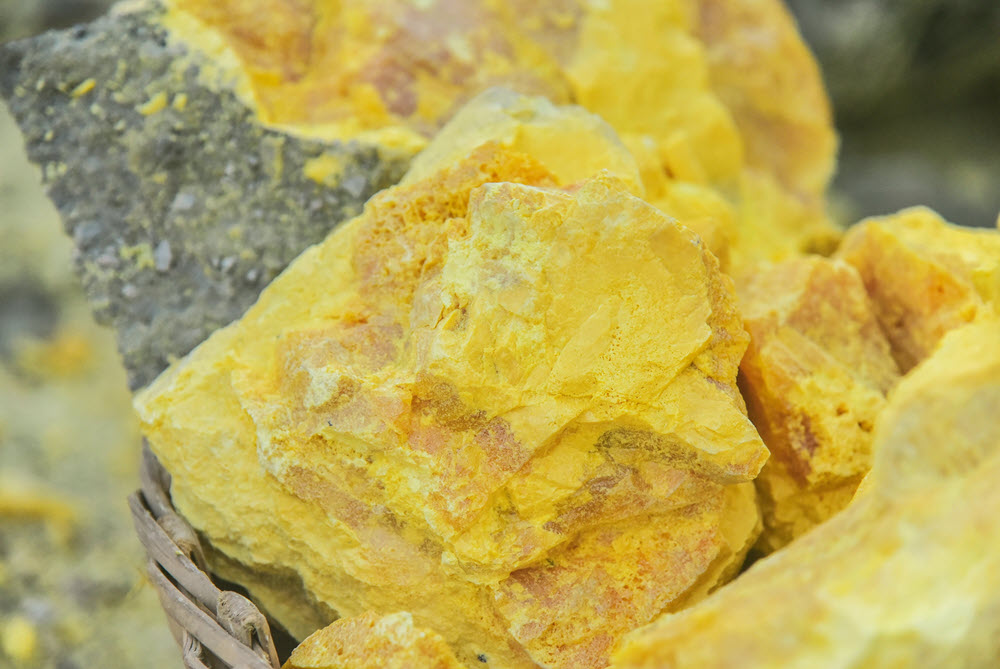
The 2026 global sulphuric acid market is expected to remain tight, keeping prices elevated. The Middle East conflict is likely to lift CFR prices through higher sulfur costs, supply disruption and freight inflation. Production from sulfur and smelter acid should remain broadly stable, while trade flows stay regionally split. On demand, phosphate fertilizer is the most vulnerable to higher prices, followed by nickel projects. Copper projects are comparatively resilient.
Indonesia is set to lead ex. China primary aluminium production growth, while the Middle East conflict is deepening an already existing supply deficit. Demand remains resilient in both China and ex. China, so the primary aluminium market is expected to stay in deficit in 2026, keeping prices elevated. By contrast, the alumina market is likely to remain in surplus and under pressure in 2026, driven by production gains in China, Indonesia and India. However, bauxite policy risks in Indonesia and Guinea add uncertainty, and alumina prices are likely to firm again from 2027 as smelter restarts and capacity growth tighten the market.
Chinese steel exports supported steelmaking raw material demand and prices in 2025, but exports are expected to ease in 2026 due to trade actions, a stronger RMB and export licensing. Although Chinese exports remain resilient (helped by cost advantages and more high-value product sales into emerging markets) weaker domestic demand and lower exports should weigh on iron ore and metallurgical coal prices.
EU CBAM would be a lasting force that will reshape trade flows, encourage sourcing shifts, through impacts on prices and relative costs.
Broadening from the individual market outlooks, the second to last presentation addressed what “critical” in critical minerals actually means, and what the characteristics of a truly critical mineral are. This is important as Willis Thomas, head of CRU+, explained that energy transition is intensifying the trend toward greater criticality, driving more core minerals to be classified as critical.
Moving beyond critical minerals, Willis then explored the themes of collaboration and scale. First, looking at the models for strategic state-led cooperation involving partnerships, we see several approaches are emerging – alliance-based models (e.g. the US), regulatory-led frameworks (e.g. EU), vertically integrated and state-coordinated systems (e.g. China) and strength-based models (e.g. the Middle East). These approaches –when paired with greater size and scale for mining companies – will be essential to meeting the demand for metals, driven by the energy transition.
At the end of the CRU Beijing cross-commodity seminar, John Johnson, Senior Advisor, focused on which commodities have the strongest price outlook, how the Middle East conflict may affect markets, and what this means strategically.
He indicated that lithium is expected to be the top price performer for 2026, with zinc and nickel being also well supported.
The conflict has lifted prices through higher energy costs and supply disruption, but the important point is that CRU expects the impact to fade by 2026 Q3. However, a longer or deeper conflict could lead to sustained high energy prices, inflation, tighter monetary policy, weaker global growth and lower commodity demand.
The global economy was already expected to slow slightly in 2026, but a prolonged conflict could reduce GDP more sharply, especially in Asia and Europe. In contrast, China has acted as a demand buffer so far, but over the longer term its economy will move away from traditional metals-intensive growth and toward new productive forces such as high-tech manufacturing, semiconductors, AI, robotics and aerospace, shifting away from metals-intensive growth, boosting demand for battery metals and critical minerals while weakening iron ore and carbon steel.
Supply issues such as resource nationalism, ore depletion, declining grades and the need for new mine supply were emphasised as major support for future prices.
Strategic themes included stronger investment outside China, a rebound in mining M&A, and a growing role for CBAM as well as critical minerals cooperation.
All the data, insights and outlooks shared during the CRU Beijing cross-commodity seminar are backed by CRU’s relevant commodity services and solutions. If you would like to learn more about our offerings, contact us here for a personalised walkthrough.