The lithium market in 2026 presents a divergence – while rising prices are fuelling aggressive expansion among miners, refiners face mounting cost pressures that threaten their viability. CRU’s detailed lithium asset data highlights that producers are capitalising on strong market conditions to drive growth, restarting idle capacity and accelerating growth projects. However, this expansion story masks a critical vulnerability downstream and lithium’s diverging fortune. The market for lithium refinery feedstock is tight. Refiners are caught in a profitability squeeze, unable to source third-party concentrate at current spodumene prices and grappling with surging input costs.
Higher prices are driving expansion and producers will increase production in 2027
In response to strong prices, most companies are restarting idle capacities or expanding their projects. CATL and MinRes have announced restarts, with 2027 production expected to climb by 145% and 26%, y/y, respectively. The restart of Jianxiawo – with an annual capacity of 105 Kt LCE – will drive CATL’s explosive increase, if it can be realised. Its restart faces delays. Although a production permit was issued in late June, its environmental impact assessment, published on 27 July, prompted public objections over procedural irregularities. Local authorities revoked the approvals on 26 August, delaying the restart further. Despite being a high-cost mine which based on CRU’s lithium asset data sits in the 4th quartile of the cost curve, Jianxiawo will provide secure raw material input to CATL’s downstream facilities.
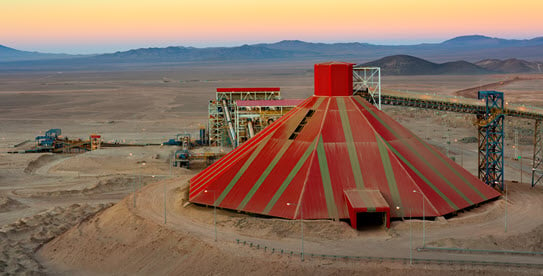
By contrast, MinRes and PLS are seeing smoother restart procedures. Both Bald Hill (MinRes) and Ngungaju (PLS) are targeting full capacity by 2026 Q4, with ramp-up timelines of five to six months from the restart announcement. Although the assets have been in care and maintenance for approximately 19 months, neither required significant capital investment or faced material permitting delays.
Furthermore, PLS is undertaking technical studies with a view to potentially increase its capacity by 150%, to 320 kt/y LCE. Pilgangooras’ P2000 expansion aims to double the mine’s capacity to 2.0 Mt/y (~250 kt/y LCE) and put into production its South America greenfield project in the coming years. In August, PLS acquired Lithium Ionic’s Salinas project in Minas Gerais, Brazil. The transaction follows PLS’ February 2025 acquisition of Latin Resources and its Colina project. PLS is expected to combine the newly-acquired Salinas project with Colina to ensure a more stable mine life. In Australia, PLS is undertaking a feasibility study for P2000 and announced pre-FID expenditure of $175 M in 2026 Q2.
While miners are thriving, refiners are being squeezed, highlighting lithium’s diverging fortune across the value chain
Geopolitical tensions are fuelling a bifurcated market between miners and refiners, with the latter suffering from a highly competitive market for spodumene, coinciding with rising reagent input costs.
At current spodumene price levels, many refineries are being priced out of the market to secure third-party concentrate. Integrated producers, able to draw on captive supply, are faring better. Supply disruptions, such as Zimbabwe's export ban, underscore the vulnerability refiners face. Sinomine exemplifies this challenge. The company temporarily suspended both production lines at its Jiangxi lithium salt refinery in mid-2026 due to a mismatch between feedstock transport cycles and production scheduling. Operations are expected to resume, progressively reaching full capacity by 2026 Q4.
In addition to lithium refinery feedstock tightness, refiners are experiencing higher processing costs, driven by elevated prices for sulphuric acid and natural gas. Consequently, refining costs for pegmatites will rise by 34% y/y in 2026. Sulphuric acid prices in China will increase three-fold y/y in 2026 to $318, driven by Middle East supply disruptions. On top of this, the conflict created a significant shock to natural gas prices, which surged by 23% y/y in 2026.
The lithium market will remain volatile and players will need to navigate it. Our Market Outlooks and Asset Services for Lithium provide the insight needed to support you in keeping track of these developments. If interested or if you have any questions, contact us here.
© CRU. All rights reserved. This content may not be copied, reproduced, republished, distributed, or otherwise used, in whole or in part, without CRU’s prior written permission. Please refer to CRU's Terms and Conditions.