The world has woken up to the fact that, for most businesses, the vast majority of their emissions footprint sits in Scope 3. At the same time, pressure is mounting on businesses to act fast in reducing Scope 3 emissions footprints. Whether the impetus arrives via regulatory mandate, customer demand, supplier pressure or carbon pricing, businesses burdened with substantial Scope 3 exposure find themselves increasingly squeezed. This is especially the case for businesses for whom net-zero targets are fast approaching.
Measuring Scope 3 has evolved from an art to a science and one which demands scrutiny and precision. The historic lack of clear standards and definitions are no longer excuses for inaction. The time has passed for education and awareness – the moment for action has arrived, and intent must now translate into tangible consequence. As a result, real-world impacts are starting to be felt in commodity value chains.
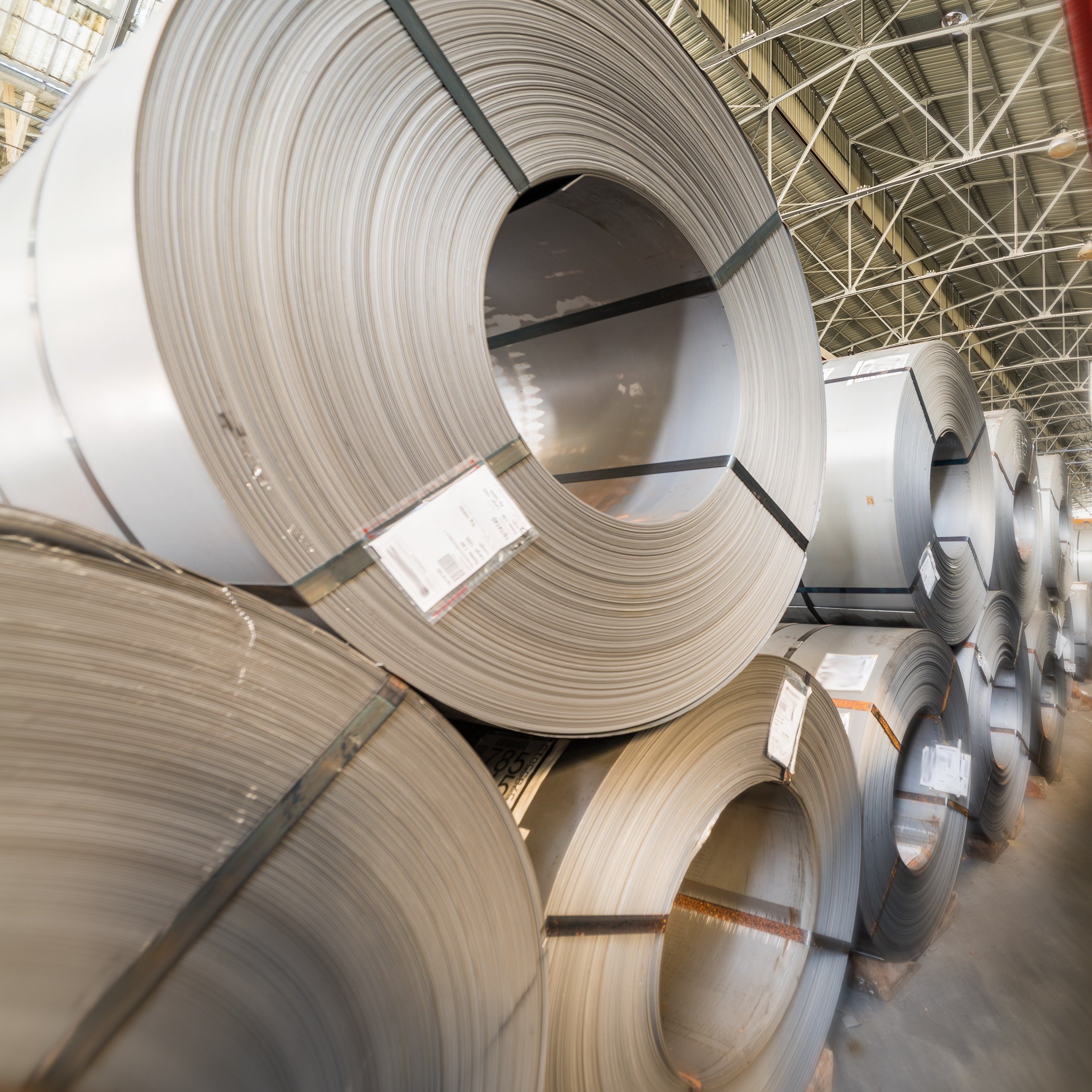
For many metal-intensive end users, a substantial share of emissions sits upstream in the production and processing of raw materials like steel, aluminium, copper, cast iron and battery metals. These materials underpin the components, equipment and infrastructure that companies buy, but the associated emissions often arise several tiers away from final assembly and well outside direct operational control. This is why Scope 3 is becoming a more prominent challenge – even once companies have managed to measure their value chain emissions and ultimately commit to reducing them, they must confront the logistical difficulties in doing so.
These supply chains are not only long, but highly complex. End users rarely procure raw materials directly. Instead, they buy through networks of suppliers, fabricators, processors, component manufacturers and assemblers, often spread across multiple countries and tiers. Materials may be blended, transformed or traded several times before reaching the final product, making emissions harder to trace and influence.
A single end-use product can depend on multiple metal industries and many intermediary actors. Unlike Scope 1 and 2, real world Scope 3 reductions cannot be delivered through operational changes alone. Progress depends on procurement’s ability to understand where emissions arise, engage suppliers across complex value chains, and create credible pathways that connect end-user demand with greener raw materials and lower emissions production routes.
CRU’s emissions data and strategy capabilities can be highly effective in supporting this process. From emissions visibility to actionable emissions reduction roadmaps, CRU combines the power of asset level data with a strategy team adept at connecting the dots.
Why Scope 3 and why now?
Scope 3 is now as high on the agenda as Scope 1 and 2. For years, companies in the mining and metals industry have planned and invested in measures to reduce Scope 1 and 2 emissions. End users are now doing the same with Scope 3.
The motivations driving interest, investigation and investment in Scope 3 vary considerably by commodity and market. Disclosure and regulatory compliance loom particularly large in Europe, where import regulations such as CBAM represent an existential prerequisite for maintaining customers and sale to market.
Yet, there is a subtler dynamic – for certain manufacturers, demonstrating a comprehensive approach to Scope 3 emissions functions as a source of competitive advantage. It signals to the conscientious consumer an alignment of values - transforming transparency from mere compliance into credibility. Whether such positioning will translate into a tangible uptick in willingness to pay a premium from the consumer remains, of course, an open question.
Commodity markets account for a significant share of Scope 3 emissions
Metallic raw materials are being consumed in greater quantities by a wide array of end users. Electrification, industrialisation and technology development are fuelling an ever-increasing demand for a number of commodities. For consumers, accounting for sensitivities in upstream activity is an important part of mapping Scope 3 exposure.
As demand increases, energy and materials consumed in producing commodities is also increasing. However, the relationship is not linear. In the case of copper, declining ore grades are increasing the amount of energy required to convert a tonne of ore into a tonne of concentrate. In steelmaking, the switch from blast furnace to electric arc furnace is increasing the amount of electricity consumed while reducing the direct emissions from carbon inputs.
It is this energy – whether it is in the form of crushing, smelting or haulage (to name a few modes) – that leads to emissions. Where this energy is deployed in the value chain depends on the commodity in question. Copper's burden falls predominantly at the mine site – aluminium's, by contrast, sits in in the smelting stage, where separating the metal from its tightly bonded oxygen is particularly energy-intensive.
The net effect of the carbon produced in the production of the metal is a footprint that the metal will carry through its lifecycle. For example, in the case of an electric vehicle, the combined embodied carbon in all the metals used in the car can be equivalent to running a gasoline car for three years.
In the case of a data centre, the Scope 3 emissions account for upwards of 70% of the emissions footprint of the data centre, of which raw materials make up a significant portion (depending on the power supply fuel type). Their use of steel, copper and aluminium in the buildings and components that make up the data centre is more intense than many equivalent industries. The big challenge in measuring exactly how much embodied carbon there is in each part of the supply chain is in the visibility.
Visibility on upstream emissions is crucial for taking action
Taking action to reduce real-world emissions is impossible without visibility, defined here as knowing, as comprehensively as possible, where Scope 3 emissions originate within the supply chain. Therein lies a paradox – how can visibility be achieved if emissions are not consistently and comprehensively reported throughout the value chain?
Many standards and systems aim for reporting consistency, feeding into Life Cycle Analyses, Material Flow Analyses, and similar metrics. However, the problem is that these systems routinely rely on crude, high-level assumptions regarding upstream raw materials. The visibility simply is not sufficient to justify greater granularity.
The alternative is to assess emissions from the ground up – a demanding undertaking that requires deep technical knowledge of raw material production processes, robust data on individual producers, and crucially, participation across customer segments. CRU combines these elements to produce emissions profiles of suppliers globally.
Our recent work mapping bottom-up Scope 3 emissions for 50 iron castings suppliers of a major equipment manufacturer exemplifies this approach. One insight emerged clearly – while survey fatigue is genuine, the cost of avoiding it is steep – default values, location-based assumptions and generic data that obscure rather than illuminate.
The links between end users and the origin of emissions are often long and complex
Once there is visibility into where emissions originate, action can be taken to reduce the associated footprint. This is where the complexity of global supply chains becomes a problem. Very rarely does an economic end user (e.g. a data centre) procure an emissions intense raw material directly. For example, the cooling systems used extensively in data centres rely on a complicated web of different metals, manufacturers, service centres and producers of the original metal. It is for this reason that making real world changes can be extremely time intensive.
To reduce time spent tackling the problem and increase the chances of success, visibility into the source of the emissions needs to be combined with strategic mechanisms that allow the best possible emissions reduction within the boundaries of what is realistic. If the utopian solution is controlling all supply chains from start to finish through direct procurement at every step, a happy medium can be found in choosing the right procurement mechanism for the right situation.
CRU worked with Meta on this exact concept – providing a playbook for Meta that matches emissions reductions in the steel used in their data centres, with actionable change in their supply chains (see here). To find out more, stay tuned for Part 2 of this insight series.
A hybrid approach is necessary to ensure real-world Scope 3 emissions reductions
Despite restructuring, very few supply chains will ever become completely carbon-free. It could also be argued that shifting from one supplier to another greener supplier only transposes the burden of Scope 3 emissions onto another customer. As such, businesses can take further action to make a real-world impact in the global Scope 3 network. By investing in sustainable production of the same materials that the business consumes, the net emissions intensity of the industry and the globe can be reduced. Knowing exactly where, when and in what format is the challenge.
A rigorous screening process of technologies and projects that plan to reduce industry emissions is needed before any investment is made. The technology may have the potential to reduce a significant volume of emissions, such as in the case for carbon capture utilisation storage (CCUS), but if the feasibility is unproven, there is a risk that real-world emissions savings fail to materialise. Capital will be misallocated without a highly robust view of which projects and technologies will make a difference in the mining and metals industry.
All stages of the value chain must take action for real-world Scope 3 emissions reductions to take place
End users making active choices to reduce Scope 3 emissions are a signal to the market that change is essential. Whether it is market access, price premium or contract negotiations, the choices made by end users will shape the future of raw material producers for better or for worse. However, they cannot achieve their goals in isolation. All stages of the value chain need to interact for real-world emissions reductions to happen. Therefore, the call to action is simple:
- End users must communicate their intent to the market. In a world of policy uncertainty, geopolitical tension and the desperate desire for supply chain security, end users with deep pockets have the power to be the bedrock of emissions reduction.
- End users also need to strive for visibility on supply chain emissions. Ultimately, as the customer, it is the end user who has most access to the market. They also have a bird’s eye view of the supply chain that allows them to compare and contrast the green credentials of the suppliers, but only if they know where the emissions are.
- Tiered suppliers can play a huge role in connecting the source of emission to the customer. Without the knowledge of who buys what from where, it is incredibly challenging to reduce emissions. Tiered suppliers can benefit from this by providing emissions reductions solutions to end users. They can become the supplier of choice by enabling the goals of the end user.
- Producers have to be proactive in bringing their lower carbon solution to an end user/tiered supplier. Even if the end user does not buy the product directly, a relationship between the producer and the end user is the first step in connecting the dots. Producers that fail to connect their lower carbon solution to Scope 3 emissions reductions risk missing out on the vital funding and market access that is so needed.
- New entrants/disruptors, like new technologies that can help to reduce industrial emissions, must be able to verify their emissions reduction credentials. Transparency and accurate accounting can give confidence to end user that the solution is legitimate.
The pressure on Scope 3 emissions will only continue to increase as the Net Zero targets of tomorrow become actions of today. To find out more about how CRU can help you with this topic, please get in touch.
© CRU. All rights reserved. This content may not be copied, reproduced, republished, distributed, or otherwise used, in whole or in part, without CRU’s prior written permission. Please refer to CRU's Terms and Conditions.