The text below is an edited, shorter version of an article by Max Reid on 31st July 2026. Access the full version here or speak to a CRU expert about market intelligence and analysis relevant to your organisation.
Sodium-ion batteries will play a role in data-centre energy storage, particularly where battery safety is a priority and power consumption rapidly oscillates. However, lower energy density and higher system-level costs than established lithium-ion technologies mean their adoption will be limited to a small portion of the installed capacity.
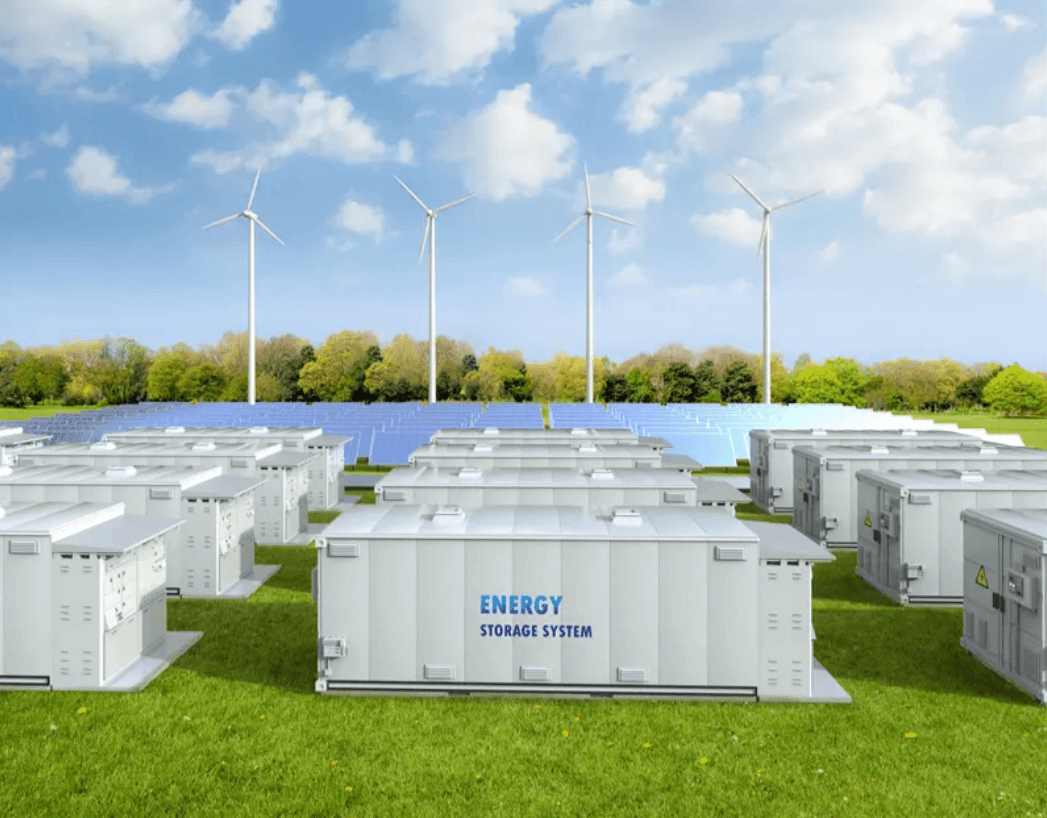
As data-centre power requirements increase, battery energy storage systems (BESS) are becoming an important part of the infrastructure needed to support reliable power. Sodium-ion technology is attracting interest as an alternative to lithium-ion, with its safety and power characteristics making it suitable for cost-agnostic applications where tolerance for battery fire risk is particularly low.
Where could sodium-ion batteries fit in data centres?
Sodium-ion batteries could be most relevant in stationary storage applications where safety is more important than energy density.
Data-centre operators need batteries that can provide reliable backup while meeting stringent safety requirements. Sodium-ion cells have roughly two-thirds the energy density of lithium iron phosphate (LFP), the established lithium-ion chemistry widely used in BESS, but are more resilient to thermal runaway and bursts of rapid power changes.
This does not mean sodium-ion batteries are set to replace lithium-ion across data-centre storage. LFP will be used for most of data centre installed capacity due to its mix of low cost, long cycle life and acceptable energy density. Instead, sodium-ion will be used in applications difficult to power with LFP for safety and power concerns.
How do sodium-ion batteries compare with lithium-ion for data-centre storage?
Sodium-ion batteries currently have lower energy density and higher costs than LFP, while their safety characteristics could make them attractive for selected applications.
For data-centre storage, the main considerations include:
- Energy density: sodium-ion cells have two-thirds the energy density than LFP, requiring nearly double the number of battery systems per MWh of project capacity.
- Safety: sodium-ion cells undergo thermal runaway at a higher temperature than LFP, and reach a lower peak temperature.
- Cost and maturity: LFP is already an established BESS technology, while sodium-ion supply chains are still developing.
These trade-offs mean the choice of battery chemistry will depend on the requirements of the individual application rather than a straightforward switch from one technology to another.
What could drive sodium-ion battery demand in data centres?
Growing AI data-centre capacity will create opportunities for sodium-ion batteries due to high power consumption at irregular intervals during model training. This is also a sector where higher battery costs have limited impact on the overall project cost.
The expansion of AI and other high-performance computing applications is increasing investment in data-centre infrastructure. As this build-out continues, demand for energy storage will boom, creating opportunities for new battery technologies that can meet specific project requirements.
CRU expects LFP to remain the dominant BESS technology due to its supply chain maturity and good all-round performance, meaning sodium-ion will develop alongside established lithium-ion chemistries rather than displace them outright. Its longer-term opportunity will depend on how quickly manufacturing scales, if developers can improve its energy density, and if developers regard sodium-ion as an opportunity to hedge against lithium-ion battery costs.
For a deeper look at the technology, costs and potential applications, see CRU’s analysis of opportunities for sodium-ion BESS in data centres.
Want to discuss the implications for your business? Speak to an expert about the market intelligence and analysis relevant to your organisation.
© CRU. All rights reserved. This content may not be copied, reproduced, republished, distributed, or otherwise used, in whole or in part, without CRU’s prior written permission. Please refer to CRU's Terms and Conditions.