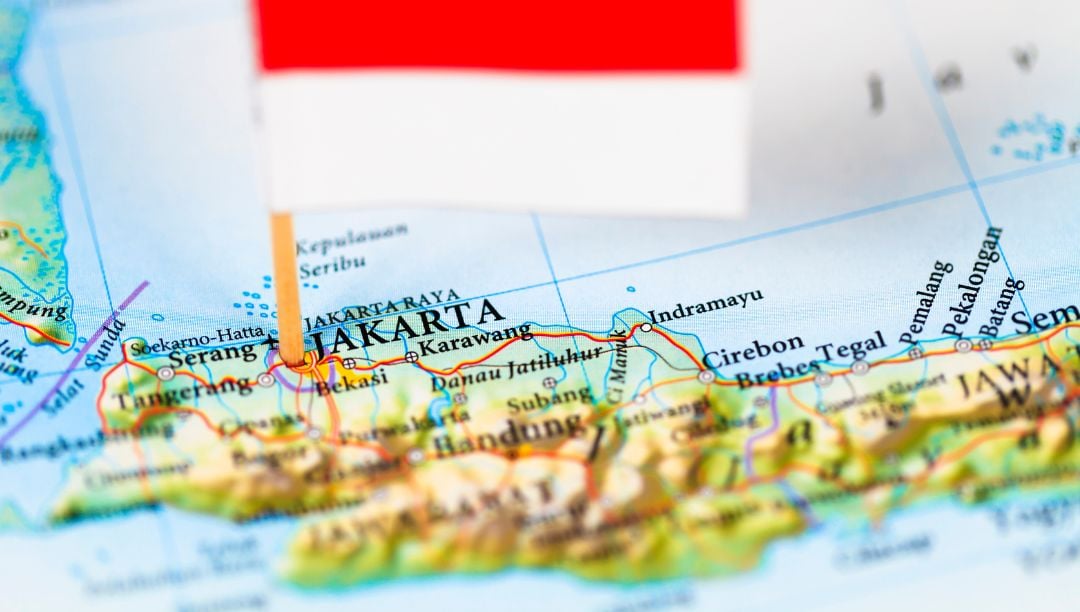
Political instability has continued to rock the nickel industry throughout 2026. The Strait of Hormuz blockage and the effects of the Middle East conflict have disrupted the supply of a key reagent in nickel processing – sulphur.
The profound price response and limited supply of this chemical have brought about mounting nickel production cost pressures and supply cuts that threaten the previously booming low-cost High Pressure Acid Leaching (HPAL) industry, which serves as a cornerstone of the nickel battery value chain. In addition to geopolitical concerns, HPAL operators have to contend with the looming environmental threat of 2026’s Super El Niño.
The increasing likelihood of water shortages in Indonesia in the otherwise rainy climate constraining water-intense HPAL activities. Operators are scrambling to de-risk themselves away from these two supply chain threats. We outline that some of the drought risk to nickel production and Indonesia sulphur import constraints that will continue to create pressure on the HPAL cost curve could be ameliorated by a change of thinking around preferred nickel smelting technology.
HPAL producers struggle to break even amid sulphur cost pressures
The sulphur price surge seen in 2026 has reversed the status quo of nickel production costs. Middle Eastern sulphur supply disruption has shaken up Indonesian importers, as 70% of the country’s sulphur was previously sourced from the region.

HPAL operations traditionally enjoyed relatively low, first-quartile industry costs as the pressure acid leach process obtained MHP (Mixed Hydroxide Precipitate) with a low energy intensity compared to the Rotary Kiln-Electric Furnace (RKEF) route used in NPI production. However, the HPAL process relies intensively on sulphuric acid as a leaching agent, typically using around 10-12 tonnes of sulphur to produce one tonne of nickel in MHP (although some newer-generation producers are reported to consume ~8t/ tNi). This greatly exposes the HPAL cost structure to sulphur price fluctuations and it has hurt HPAL producers significantly. CRU forecasts the share of chemicals costs in total site costs to grow to 57% in 2026, up from 40% in 2025, and just 25% in 2024.
As a result, we forecast that site costs (before by-product credit deductions) for HPAL assets will rise from an average of ~$9,200 /t in 2025 to ~$15,700 /t in 2026. This amounts to a 70% increase y/y in site production costs of HPAL and has sent MHP producers into the higher quartiles of the cost curve. Based on CRU forecasts for sulphur and sulphuric acid pricing, we do not expect this upward cost momentum to unwind materially in 2027. Consequently, the assets forming the HPAL cost curve (within the broader nickel cost curve) will remain in the upper quarttiles next year as well.
However, the effects of the sulphur supply shock have not been limited to cost inflation, and the low availability of the reagent has led to supply cuts. In June, the major HPAL asset Huafei announced it would half its production output to spread out its sulphur stock.
El Niño could shake up MHP supply further
Adding to the potential threats to HPAL supply, the 2026 El Niño Southern Oscillation (ENSO) event could further jeopardise production if extreme water shortages in Indonesia materialise. Historically, Indonesia has experienced drops in rainfall of more than 50% during El Niño years . This year’s event is expected to be more extreme than ever seen before, as the local sea surface temperature anomaly (a key el Niño signal) is already 0.64°C hotter than previous ENSO cycles in the same month.
This leads to several nickel production threats in Indonesia – extreme temperatures can lead to unsafe working conditions, wildfires could spread and force shutdowns, food insecurity can occur if water is not available for crops (especially for rice production) and water shortages could cause hydroelectric dams to ration water for industrial parks. HPAL operations, once again, are threatened disproportionately in this scenario. This is because (compared to the water consumption of smelting NPI) the HPAL process has several water-intensive steps, including the acid leaching of nickel ore, the washing and decanting of precipitates, and the preparation of the tailings slurry.
The water consumption of HPAL plants is estimated by industry sources at ~200 cubic meters per tonne of nickel produced, which means this segment of the Ni industry is exposed, should Indonesia be forced to ration its water amid extreme droughts. At the time of writing, Nickel Industries has announced a production cut to 30% of nameplate capacity, down from 50%, at its newly-inaugurated ENC plant. Therefore, we can reasonably expect other HPAL producers may follow. For more on this topic, see our newly published Insight.
Alternative technologies could act as a lifeboat
CRU has previously written about the exploration of alternate pathways to produce sulphuric acid and alleviate pressure on the industry. Although not deployed at scale in the Indonesian nickel context yet, pyrite- or gypsum-derived acids could serve producers by supplementing scarce sulphur imports. Apart from novel processes to produce the much-needed acid units, pre-existing mineral processing technologies could also become commercially-viable pathways to complement struggling HPAL operators.
The oxygen-enriched side blown furnace (OESBF) is part of the ‘family’ of side blown smelting technologies, well established within the copper industry. It is now returning as a nickel smelting technology to obtain high-grade nickel matte. Most production in Indonesia uses RKEF, or rotary kiln - electric arc furnaces. OESBF is an alternative smelter technology with lower electricity consumption. This is because, as opposed to an electric arc furnace, oxygen and coal are blown through the side of the OESBF to heat and smelt ore into nickel matte. The furnace was pioneered for nickel applications in Indonesia by CNGR, installing 80,000 t Ni contained capacity in 2023.
This material can supply the battery market by enabling the conversion of matte to nickel sulphate or nickel cathode. Should the production economics of HPALs continue to be squeezed, the traditionally more expensive matte conversion route could become more attractive as a backup option, as CRU understands its reliance on sulphur is only 1.5 t /t Ni produced, much lower than 8–12 t /t for HPALs.
© CRU. All rights reserved. This content may not be copied, reproduced, republished, distributed, or otherwise used, in whole or in part, without CRU’s prior written permission. Please refer to CRU's Terms and Conditions.