Indonesian HPAL nickel operations continue to face a multitude of challenges in 2026. The sulphur supply squeeze and price increase have significantly increased processing costs. Indonesian government policy, such as the new minimum ore price formula and limited RKAB quota, has added to these issues. Now, another production bottleneck has emerged, this time from a natural source in the super El Niño, which is causing an extended and exacerbated dry season in Indonesia. This is leading to shortages of available water, which has started to affect production of NPI and MHP – the latter to a more significant degree.
El Niño has drastically reduced Indonesian rainfall and is limiting water availability for producers
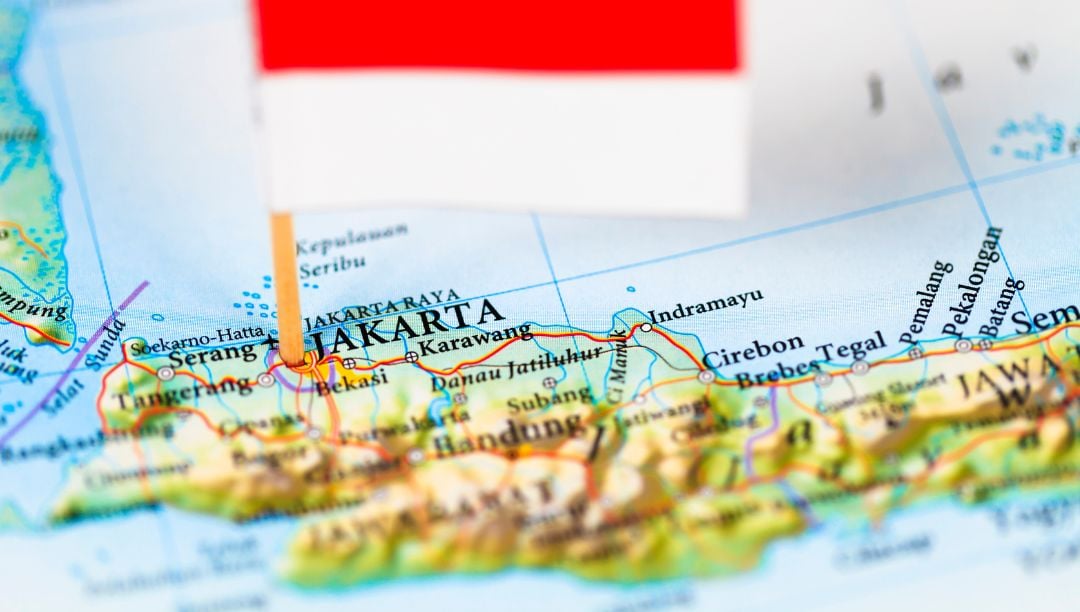
The dry period is affecting nearly all areas of Indonesia, including the centres of nickel production, Sulawesi and Maluku. According to a recent Nickel Industries press release, a drastic reduction in the average August rainfall – from 222 mm to below 4 mm – was seen in the Morowali area. Rainfall data from BKMG, the Indonesian Meteorology Agency, shows a near-complete lack of rainfall across Sulawesi since August. This has resulted in the new HPAL operation ENC reducing its utilisation rate from 50% to 30% until water availability comes back. The company expects this to occur at the start of the wet season in December.
The drought affects most of the rest of Indonesia as well, including the areas around Weda Bay and Obi Island. These areas have also seen virtually no rain since the start of August. It can therefore be expected that all HPAL operations are faced with water shortage issues, likely putting a ceiling on MHP output for the rest of the year.
Water usage in Indonesian nickel processing
Both principal nickel processing methods (ore smelting and acid leaching) require a notable amount of water. While smelting with rotary-kiln electric furnaces does not directly use water, it is needed for auxiliary steps, such as dust suppression and cooling. While the complexity of deconvoluting each of these steps makes an exact estimate possible, the average water usage of NPI smelting is estimated to be around 70 m3/t nickel.
Meanwhile, acid leaching relies on water more directly. A slurry of concentrated sulphuric acid is diluted with water in order to extract the metals, creating an aqueous solution out of which the MHP is precipitated. As with the RKEF, auxiliary processes also consume water, such as the acid neutralisation and residue handling steps. As a result, the water consumption of the HPAL process is at least twice that of NPI smelting, with an average estimate around 200 m3/t.
It is important to note that these figures are range estimates, rather than exact figures. When reporting figures, producers are usually only able to report a total water withdrawal figure, with only broad breakdowns by end use. Water is used for many different processes that may not be directly related to nickel processing, such as facility cleaning or roadworks. Usage intensity between facilities of different scale can also affect cooling and other auxiliary processing requirements. Therefore, the water withdrawal number can vary between facilities.
Similarly, a bottom-up calculation of the water usage by processing step may not include some of these auxiliary processes. Rather than the exact figure, the key takeaway is that the consistently higher water usage of HPAL operations presents a bigger risk to MHP production for the rest of the year.
HPAL output could be cut by over 10%
Nickel Industries announced that the newly online ENC operation, based at IMIP, will operate at 30% capacity for the remainder of the dry season, down from 50% previously. It is reasonable to expect that all other HPAL operations – facing similar water shortages and often sharing infrastructure with one another – are considering temporary output cuts of a similar scale.
While it is also possible that NPI output may be affected by the drought, the already existing processing cost issues have led to talks of MHP production cuts and new projects being pushed back. We therefore expect a further production decrease of Indonesian MHP for the next two months, at least.
If ENC is reducing output by 20%, then assuming the same for other operations would mean a reduction in output from around 208 kt to 180 kt for 2026 H2, reducing the annual total to approximately 370 kt of nickel in MHP down from 400 kt.
As a feedstock for the production of nickel sulphate and cathode conversion, MHP can be substituted by nickel matte. If matte production continues to decrease, as it has in recent months, and also becomes affected by the water shortage, we could see MHP payables reverse their recent softening trend and rise above 90% once more.
We will keep track of developments in Indonesian nickel production and the consequences for prices via the Nickel Market Outlook and Asset Services.
© CRU. All rights reserved. This content may not be copied, reproduced, republished, distributed, or otherwise used, in whole or in part, without CRU’s prior written permission. Please refer to CRU's Terms and Conditions.