The energy price shock following the US-Iran conflict has thrust electrification into the centre of debate. However, we do not believe it will meaningfully accelerate the energy transition in the near term due to the limits of supply chains and grid availability.
Copper and aluminium are central to these challenges. Wire and cable consume ~12% of global aluminium, but ~60% of copper. Aluminium production (74 Mt) far exceeds copper (24 Mt), but copper is far more mining-intensive, with a 500:1 rock-to-metal ratio versus that of 10:1 for aluminium.
Aluminium's bottleneck lies in smelting, which requires significant, uninterruptible power, making it hard to decarbonise relative to its current global average emissions of ~11 tCO₂e/t. Our previous analysis shows that even the most modest climate-aligned scenario requires a 60% aluminium intensity reduction by 2050 from 2025 levels, at high cost.
The emission intensity of copper is ~4.3 tCO₂e/t copper for primary pyrometallurgical production and the vast majority of emissions are from mining, chiefly from diesel-powered haulage. Here, trolley-assist and battery-electric alternatives are gaining momentum as potential solutions.
In this insight, we explore the use of solar-plus battery systems to decarbonise these operations.
Solar can deliver competitive LCoE at high-capacity factors, but 100% firmness sends costs exponential
Solar module cost reductions have consistently outpaced even the most optimistic forecasts and improving module efficiencies will allow costs to fall further. We expect battery costs will follow a similar path as battery performance is improved.
Given this, the conventional view of ‘renewable-only’ generation costs (i.e. excluding storage) is becoming less relevant today. What matters increasingly is the cost of power at a given capacity factor (CF) and firmness, which requires a system-level view of levelised cost of electricity (LCoE), allowing an apples-to-apples comparison across technologies.
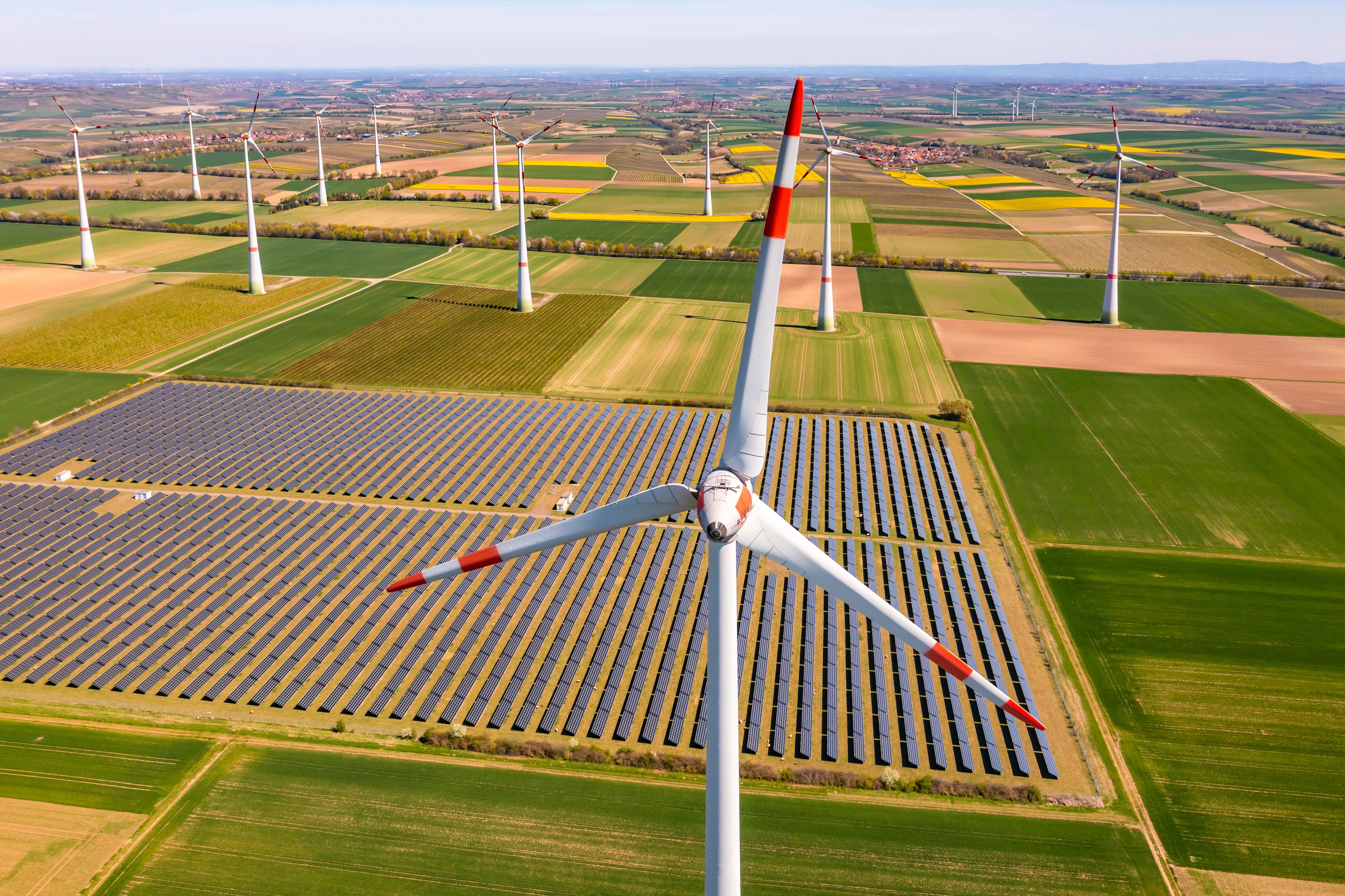
The Atacama Desert in Chile, a key copper producing region, has a superior solar resource. A basic 1 MW solar system there can achieve an LCoE of ~$30 /MWh at an AC CF of ~30%. This CF is high for solar globally but too low for a continuous industrial operation, as it implies zero power for many hours each day. As battery storage is added and the solar system is overbuilt relative to the load power rating, both CF and costs rise, but the industrial operation would still face periods of zero power availability for all CFs below 100%.
A power supply that forces the load to flex down to 0% output in any one-hour period is defined here as ‘0% firm’. As the CF climbs towards 100% and power becomes increasingly ‘firm’, the LCoE grows exponentially because significant additional solar and battery is needed to cover low solar output periods.
The charts below show that, even at 98% CF, hourly power supply from a solar-plus-battery system will still drop to zero during periods of low solar output, meaning the load – or industrial operation – would need to be able to flex rapidly to 0% output at these times. This zero-power scenario can occur at any point during low-solar periods.
A solar-plus-battery system could boast a CF of 99% and still have a firmness of zero, because at this CF there will always be periods when solar insolation is insufficient and the batteries are depleted.
Contrarily, as CF of the system is lowered, lowering the cost power (see above), the periods when there is a shortfall in power supply rise (see below).
A high – but not 100% – capacity-factor solar-and-battery system can deliver firm power under good weather conditions, and at low cost as well. However, over the course of a full year, darker days still occur, so maintaining reliable power supply requires intelligent forecasting and scheduling, alongside backup capacity.
Latitude is a key determinant of solar cost and similar latitude regions with equally compelling solar and battery economics (e.g. Middle East, Western Australia etc.) face the same fundamental cost challenge at high CFs. However, the cost challenge becomes far greater for regions with less-favourable solar conditions. For example, the Grasberg copper mining region of Indonesia, which is closer to the equator and has only slightly poorer solar conditions, exhibits a LCoE of ~$100 /MWh at a CF of only 60%, rising above $200 /MWh at a CF of 100%; or fully firmed power supply.
Electrifying haulage: Flexible by design, adaptable to variable power
Copper ore processing requires firm, reliable power and most non-haul mine processes (e.g. crushers, conveyors, mills, flotation circuits etc.) are already electrified. Haulage is the exception. Today's haul trucks remain predominantly diesel-powered, presenting a significant opportunity for renewable electrification through trolley assist and battery-electric vehicles.
Trolley assist requires firm power while a loaded truck climbs a ramp, as any interruption risks a stall on a steep gradient, but this doesn't necessarily make it incompatible with renewables. However, uptime would fall to accommodate power shortfalls.
Battery-electric fleets decouple charging from driving, meaning haulage could potentially run on a solar-plus-battery system without grid power, though, as above, uptime would fall during periods of insufficient solar supply. Since the processing chain relies on a consistent ore supply, a sustained power gap can cascade through the process and reduce concentrate production, but several buffers give the mine time to respond before that cascade becomes serious.
The first buffer is the truck's onboard battery. Trucks already running continue their current cycles even if charging is interrupted, buying immediate time. The second is stockpile. The run-of-mine pad decouples haulage from crushing, so minor fleet disruption has no immediate effect, while the coarse ore stockpile between crusher and mill can absorb 12–24 hours of mill feed.
Unlike ventilation fans or pumps, haul trucks are batch-operated and dispatchable, with availability already varying daily for maintenance and blasting. Automated systems can adjust the active fleet in real time. Even so, intermittent power will still lower utilisation of the fleet, a larger fleet will be needed on electrification. This is a key consideration: the variability of a solar resource needs to absorbed somewhere, whether at source with solar overbuild and batteries or onsite through higher capacity fleets.
The optimal combination of solar overbuild, battery storage and fleet capacity will depend on the quality of the solar resource and the relative costs of solar-plus-battery system, the battery-electric fleet and grid and diesel generation. Regardless, these costs need to be factored into the overall cost equation.
Full cost of diesel-to-battery-electric haulage conversion
Considering the above discussion, we set out an initial view of cost impacts below – reflecting both annualised capital charges of investments and operating cost changes – resulting from a conversion from diesel-electric trucks to battery-electric trucks (BEVs) with trolly assist at a copper mine.
The conversion removes diesel costs but introduces new costs on power supply and fleet conversion. Overall, we expect full conversion would add ~$300 /t to the cost of copper production.
Power supply costs are driven by four components: solar generation, battery storage, backup diesel and reserve capacity for reliability. Fleet conversion costs are dominated by the capital premium of BEVs over diesel-electric equivalents. Charging infrastructure, long-term battery replacement reserves plus smaller items such as additional trucks to offset charging downtime, fleet refit costs, labour costs and a minimal resale credit from displaced diesel trucks make up the remainder.
Tax treatment adds complexity but is not a material factor. Further, trolley assist may deliver productivity gains at some sites (e.g. faster uphill transit times) that could partially offset the added cost. We have ignored both here.
Mining’s renewables shift is displacement, not full substitution
The energy price shock has exposed a vulnerability of diesel-dependent operations to geopolitical disruptions, creating a 20% increase on average compared with 2025 fuel costs. Even if diesel prices moderate, the real risk is price volatility, not just average price levels, and volatility alone can strain budgets and supply chains. For operations in strong-solar regions, while full electrification may lift overall costs, it offers value by securing predictable costs and insulating against spikes.
This fits a broader mining-sector trend as more miners apply renewables to their operations. Firstly, through Power Purchase Agreements – a shift that accelerated in Chile from 2020, where the grid mix is led by hydro, solar and wind. Secondly, by operating their own renewable plants. Fortescue, for example, commissioned a 190 MW solar farm in 2025 and has since commenced work on a 690 MW solar hub, with total renewable capacity set to exceed 1.4 GW.
Still, the near-term story is partial displacement, not full substitution – solar-plus-battery deployed alongside grid connections and diesel backup, not in place of them. The transition is clear but paced by project economics, technology maturity and site-specific constraints.
If you want to know more about renewables and electrification, contact us, we’ll be happy to talk.
© CRU. All rights reserved. This content may not be copied, reproduced, republished, distributed, or otherwise used, in whole or in part, without CRU’s prior written permission. Please refer to CRU's Terms and Conditions.